
By Naldo Neto, IRATA Level 3 and licensed painter · Updated October 2026 · 2 min read
Key takeaways
- Concrete cancer is spalling caused by corroding steel reinforcement.
- Rust stains, cracks along reinforcement lines and drummy or falling concrete are the warning signs.
- It gets worse and more expensive the longer it is left.
- Proper repair means cutting back to sound concrete, treating the steel and reinstating with repair mortar.
Concrete cancer is one of the most common remedial problems on Sydney apartment buildings, especially those built between the 1960s and 1990s. Caught early, it is a manageable repair. Left alone, it spreads, leaks and can drop pieces of concrete from height.
What is concrete cancer?
Concrete normally protects the steel reinforcement inside it. Over time, two things can break down that protection: carbonation (carbon dioxide from the air slowly reducing the concrete's alkalinity) and chlorides (salt, especially near the coast). Once water and oxygen reach the steel, it starts to rust. Rust takes up more space than steel, so it pushes on the concrete around it until the concrete cracks and breaks away. That breaking away is called spalling.
Signs to look for
- Rust stains running down from cracks or slab edges
- Cracks along straight lines, often following the line of the reinforcement at balcony edges and columns
- Bulging or drummy concrete that sounds hollow when tapped
- Exposed steel where concrete has already fallen away
- Pieces of concrete found on balconies, driveways or footpaths
- Leaks into the units below balconies
Balcony slab edges, soffits (the underside of balconies), columns and parapets are the most common locations.
Why it matters
Falling concrete is a safety risk to residents and the public. In advanced cases the strength of balcony edges and other elements can be reduced. Repairs also get more expensive the longer they wait, because the corrosion spreads along the steel.
For owners corporations, common property maintenance is a legal duty under the Strata Schemes Management Act 2015. Visible spalling is a defect that should be inspected promptly.
Why you can't judge it from the ground
Many early defects can't be seen from the street or a balcony. Cracks are fine, drummy areas look normal, and staining is easy to miss on upper levels. A close inspection, where each area is sounded with a hammer and visually checked, is the only reliable way to map the extent. Rope access lets an inspector reach every part of a high-rise façade without scaffold.
What the repair involves
- Mapping and marking every defect, with photos
- Breaking out loose and contaminated concrete back to sound material
- Cleaning the reinforcement and coating it to stop further corrosion
- Rebuilding the section with polymer-modified repair mortar
- Applying a protective or anti-carbonation coating and repainting
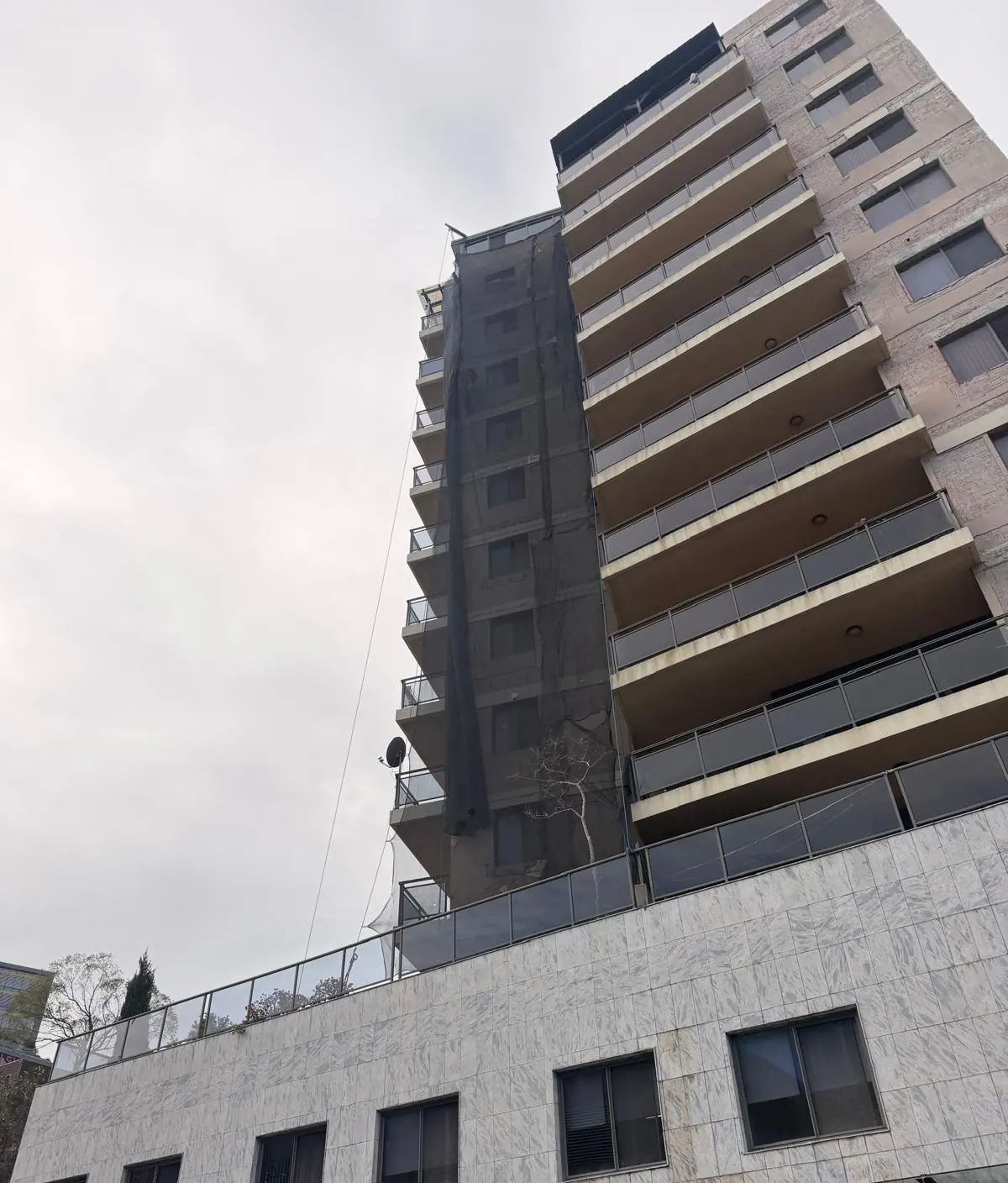
On occupied buildings, containment netting and exclusion zones keep debris away from people below. Larger jobs are often specified by a structural engineer.
What to do now
If you see signs of concrete cancer, fence off any area where concrete could fall, photograph what you can see, and arrange an inspection. You can see how we approached a full façade in our Bankstown high-rise case study, or read about our concrete cancer repair service.
Sources and further reading
- IRATA International: rope access training and the International Code of Practice
- SafeWork NSW: managing the risk of falls at workplaces
- Standards Australia: AS/NZS 4488, AS/NZS 5532 and AS/NZS 1891.4
- NSW licence check: verify any contractor's licence
Questions
Can concrete cancer be fixed?
Yes. Damaged concrete is removed, the steel is cleaned and treated, the section is rebuilt with repair mortar and then protected with a coating.
Is concrete cancer covered by strata insurance?
Generally not, because it is a gradual deterioration rather than sudden damage. It is usually funded through the capital works fund or a special levy. Check your policy.
How much does concrete cancer repair cost?
It depends on the number and size of defects and the access needed. An inspection that maps every defect is the best way to get an accurate fixed price.
About the authorNaldo Neto leads Tactical Height Solutions. He is an IRATA Level 3 rope access technician and licensed painter with a background in rendering and remedial work on Sydney buildings. More about Naldo.