
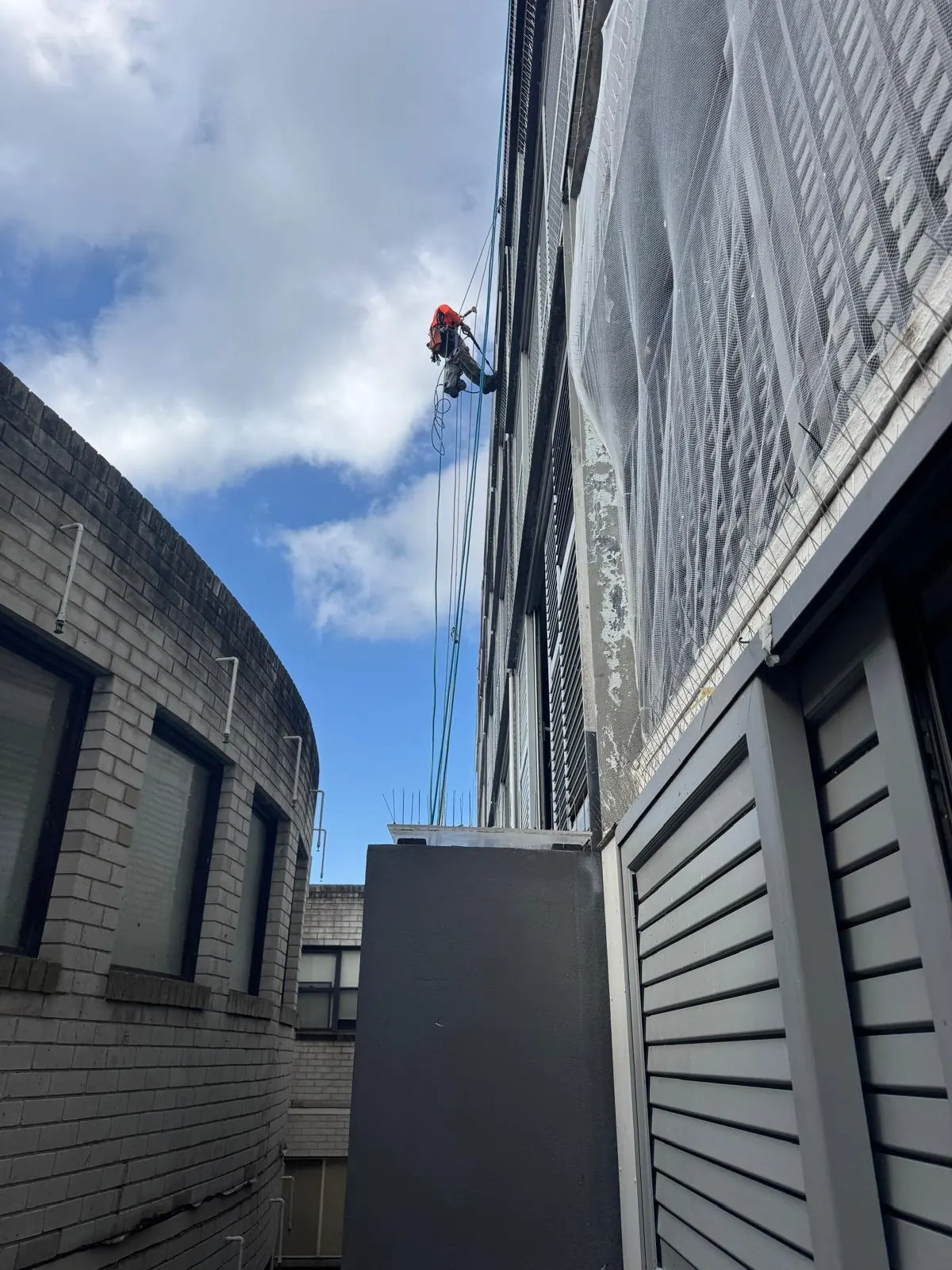
By Naldo Neto, IRATA Level 3 and licensed painter · Updated October 2026 · 2 min read
Key takeaways
- IRATA sets the international training and safety system for rope access.
- Technicians are assessed at Level 1, 2 or 3; Level 3 technicians supervise.
- Every IRATA job needs a Level 3 supervisor and a rescue plan.
- Ask any contractor for their technicians' IRATA numbers and levels.
If you have looked at rope access contractors, you will have seen "IRATA certified" on almost every website. Here is what it actually means, and why it matters who is supervising your job.
What is IRATA?
IRATA International is the Industrial Rope Access Trade Association. It sets training, assessment and work standards for rope access around the world, including a code of practice for how rope access work is planned and carried out. In Australia, the Australian Rope Access Association (ARAA) also certifies technicians, and both systems are widely recognised.
The core idea is simple: every technician is attached to two independent ropes, a working line and a backup line, each on its own anchor. If one fails, the other holds. Combined with trained technicians, inspected equipment and a rescue plan, it has a strong safety record.
The three levels
- Level 1 technicians can carry out rope access work under the supervision of a Level 3. They are trained in rope techniques and basic rescue.
- Level 2 technicians have logged experience as a Level 1 and passed a further assessment. They can rig ropes and carry out more complex rescues, still under Level 3 supervision.
- Level 3 technicians have logged further experience and passed the highest assessment. They are responsible for the whole worksite: the rigging plan, the safety of the team, rescue cover and the work method.
Progression between levels requires logged hours and time at each level, then a fresh assessment by an independent assessor. Certificates must be renewed every three years.
Why the Level 3 matters most
Under IRATA's code of practice, every rope access job needs a Level 3 supervisor. That person decides where ropes are rigged, checks the anchors, plans rescue and is accountable for what happens on site. A company can have many Level 1 technicians, but without a competent Level 3 on your job, it isn't being run to the IRATA system.
What IRATA does not cover
IRATA certifies how a technician works on ropes. It doesn't certify trade skills. A Level 3 technician isn't automatically a painter, a remedial builder or a glazier. For trade work like painting or concrete repair, check that the people doing it also hold the relevant trade qualifications and licence. That combination is the reason we built our team around licensed painters who are also rope access technicians.
Questions to ask a rope access contractor
- Who will be the IRATA Level 3 supervisor on our job?
- Can you send certificates for the technicians?
- Are our roof anchors certified, and will you check them before use?
- What is the rescue plan?
- Can we see the SWMS?
- What trade qualifications and licences does your team hold for the work itself?
- Can you send current certificates of currency for insurance?
Read more about how we run every job, or ask us a question.
Sources and further reading
- IRATA International: rope access training and the International Code of Practice
- SafeWork NSW: managing the risk of falls at workplaces
- Standards Australia: AS/NZS 4488, AS/NZS 5532 and AS/NZS 1891.4
- NSW licence check: verify any contractor's licence
Questions
What does IRATA stand for?
IRATA stands for the Industrial Rope Access Trade Association, the international body that sets rope access training and safety standards.
How long is IRATA certification valid?
IRATA certification must be renewed every three years by reassessment.
Does every rope access job need a Level 3?
Yes. Under the IRATA system every rope access worksite must be supervised by a Level 3 technician.
About the authorNaldo Neto leads Tactical Height Solutions. He is an IRATA Level 3 rope access technician and licensed painter with a background in rendering and remedial work on Sydney buildings. More about Naldo.