
By Naldo Neto, IRATA Level 3 and licensed painter · Updated October 2026 · 3 min read
Key takeaways
- The access method can move a repaint price more than the paint does.
- Rope access sets up in hours with a small ground footprint; scaffold takes days to weeks.
- Boom lifts suit low buildings with level ground access; swing stages suit long, flat runs.
- Ask your contractor which method suits your building, and why.
Before anyone quotes a repaint on a multi-storey building, someone has to decide how the painters will reach the wall. That choice often moves the price more than the paint does. There are four common options in Sydney: rope access, a boom lift or elevated work platform (EWP), a swing stage, and scaffold.
Rope access
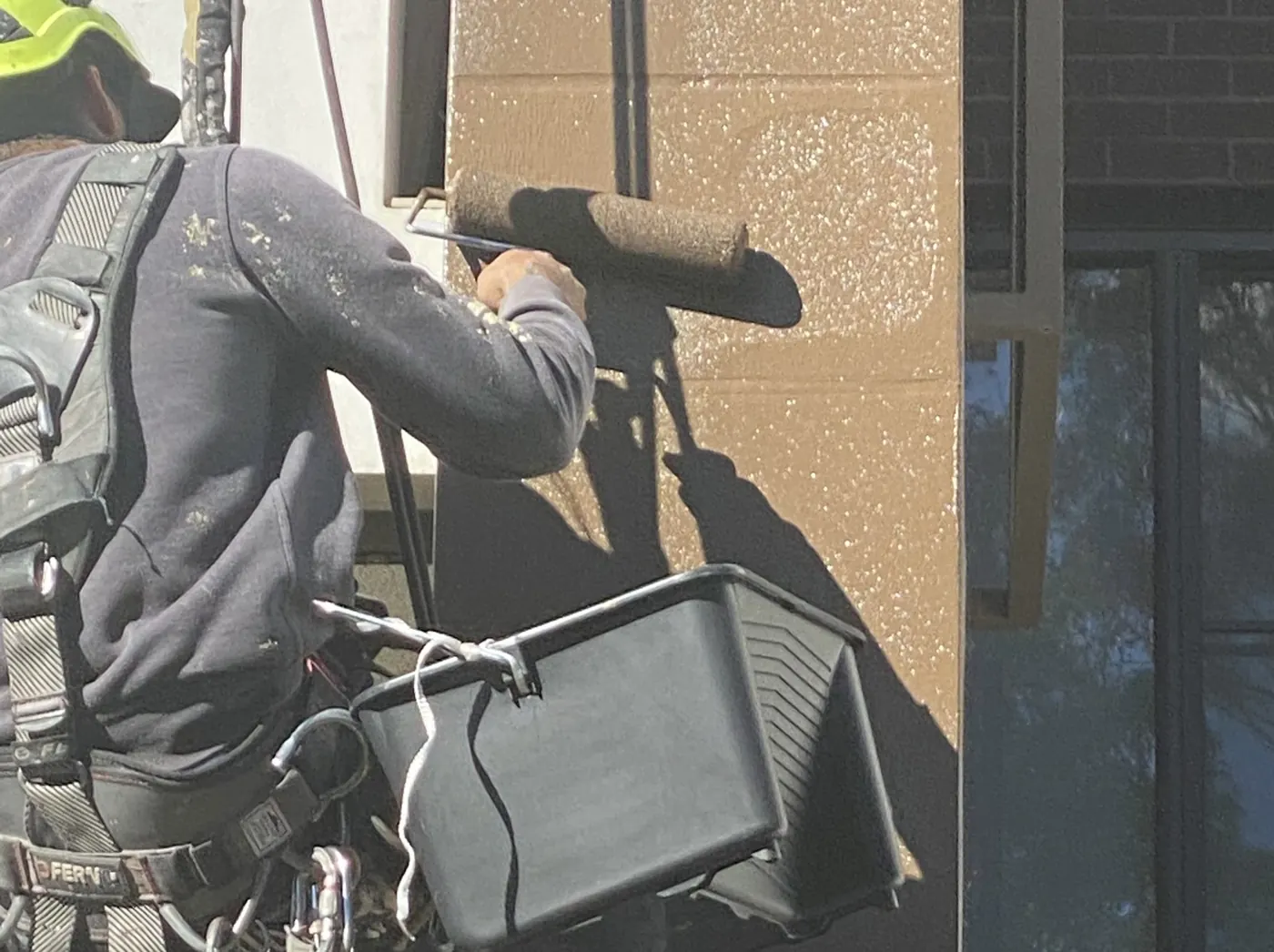
Painters work on two ropes each, rigged from certified roof anchors, and paint the building in vertical drops. Set-up takes hours, the ground footprint is a small exclusion zone at the base of each drop, and there is nothing across balconies or windows overnight. It suits most repaints, repairs and sealant work on buildings over two storeys, as long as there are suitable anchors or they can be installed. The main cost is labour time on the rope.
Boom lift or EWP
A boom lift also sets up in hours, but it needs ground access and a level hardstand close to the wall, and its reach limits it to low and mid-rise work. It can be a good fit for a low building with an open car park or street frontage. The cost is machine hire and the operator, and it can tie up driveways and footpaths while it is there.
Swing stage
A swing stage is a suspended platform hung from a roof rig. It takes a day or more to install the davit or roof rig, and it suits long runs of glazing or very repetitive work on one elevation. On buildings with lots of setbacks, balconies or detail, it is slower to move than ropes.
Scaffold
Scaffold is designed, erected, inspected and later dismantled, which takes days to weeks and often needs a council permit over the footpath. It covers every balcony and window on the elevation for the whole job. It still makes sense for heavy work across a whole elevation over a long period, where many trades need a platform at once.
Side by side
| Rope access | Scaffolding | Boom lift or EWP | Swing stage | |
|---|---|---|---|---|
| Set-up time | Hours: rigged from roof anchors on the day | Days to weeks to erect and dismantle | Hours, but needs ground access and level hardstand | A day or more to install the davit or roof rig |
| Ground footprint | Small exclusion zone at the base | Full perimeter, often over footpaths and gardens | Large base area near the wall | Small, but needs a suitable roof structure |
| Height reach | Any height with suitable anchors | Any height, cost rises with every lift | Limited by the machine, typically low to mid-rise | Any height with a suitable rig |
| Disruption to residents | Low: no structure across windows or balconies | High: blocked light, access and security risk | Medium: noise and ground disruption | Low to medium |
| Best for | Painting, repairs, sealing, cleaning and inspections on most buildings | Heavy work across a whole elevation for a long period | Low-rise work with good ground access | Long runs of glazing or very repetitive work |
| Main cost driver | Labour time on the rope | Hire, erection, permits and time on site | Machine hire and operator | Rig installation and hire |
General guide only. The right method depends on the building, the work and the site. We also arrange boom lifts, swing stages or scaffold where a job needs them.
How to decide
- Most repaints over two storeys: rope access, because there is almost no set-up cost and residents keep their balconies.
- Low buildings with easy ground access: a boom lift can be quick for short jobs.
- Long, flat runs of glass or cladding: a swing stage can be efficient once rigged.
- Heavy works across a whole elevation for months: scaffold.
A good contractor will tell you if your building suits a different method. We also arrange boom lifts, swing stages or scaffold where a job needs them. See rope access painting, or send us a few photos and we'll tell you which method fits your building.
Need rope access painting on your building?
Send the address and a few photos. We reply the same day, inspect for free and give you a fixed-price quote, with our insurance certificates and SWMS attached.
Get a free quote Call 0478 152 630 About our rope access painting
Sources and further reading
- IRATA International: rope access training and the International Code of Practice
- SafeWork NSW: managing the risk of falls at workplaces
- Standards Australia: AS/NZS 4488, AS/NZS 5532 and AS/NZS 1891.4
- NSW licence check: verify any contractor's licence
Questions
Is rope access cheaper than a boom lift for painting?
For buildings over two storeys it usually is, because there is no machine hire and no need for a level hardstand beside the wall. For a low building with open ground access, a boom lift can be competitive on a short job.
When is a swing stage better than rope access?
On long, flat runs of glazing or very repetitive work on one elevation, once the roof rig is installed. On buildings with balconies, setbacks or detail, ropes are usually quicker to move.
Do you only work on rope?
No. Most of our façade work is on rope, but we also arrange boom lifts, swing stages or scaffold where a job needs them, and paint from the ground and ladders where that suits.

About the authorNaldo Neto leads Tactical Height Solutions. He is an IRATA Level 3 rope access technician and licensed painter with a background in rendering and remedial work on Sydney buildings. More about Naldo.